Share Barbara B Peabody's obituary with others.
Invite friends and family to read the obituary and add memories.
Stay updated
We'll notify you when service details or new memories are added.
You're now following this obituary
We'll email you when there are updates.
Select your format and elements to print

IN LOVING MEMORY OF Barbara B Peabody
Barbara B
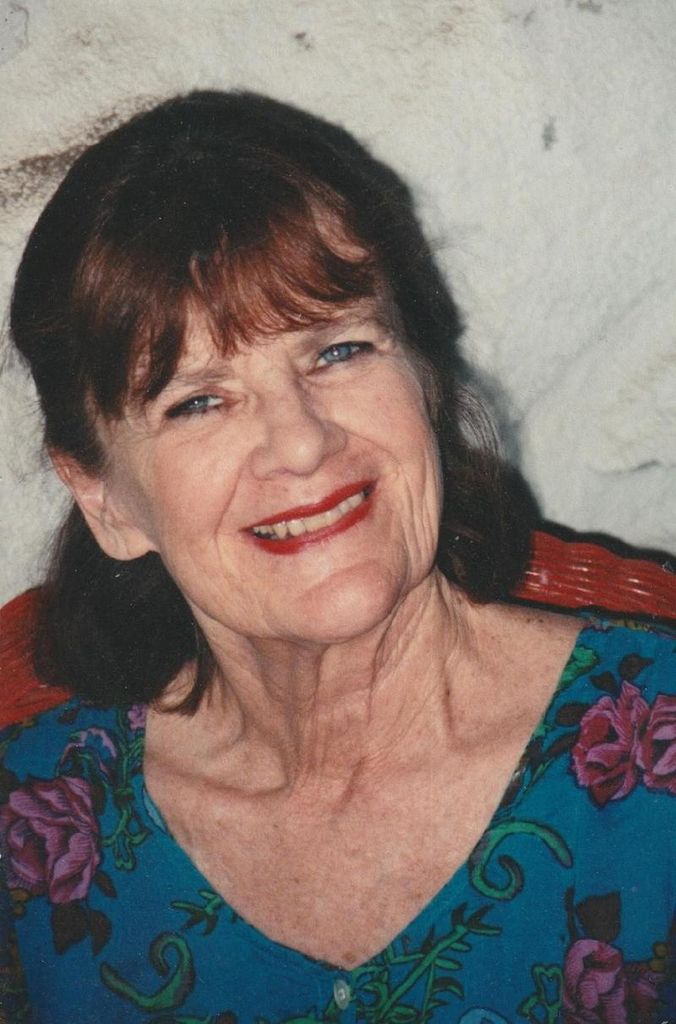
Peabody
Mar 3, 1933 — Jun 17, 2025
Tucson
Barbara B Peabody's Obituary
Barbara Peabody (March 3, 1933–June 17, 2025)
It is with deep sadness that the family of Barbara Peabody shares her passing on June 17th, 2025. She is remembered for her inspiring, passionate life.
Barbara was born on March 3, 1933, in Boston, Massachusetts, the daughter of Frances and Millard Peabody. She grew up in a large, tight-knit family, with three siblings and many cousins. They weathered the storms of life with determination and loyalty, buoyed by a proudly shared trait: wry wit. She gained an understanding of human challenges through her sister Charlotte's journey with polio, the world's Great Depression, and a move to Washington DC so her father could work in Army headquarters during and after World War II. Through these experiences she developed a determined resilience required to move through hard times and make things better, no matter the challenge. Along the way, she became an accomplished pianist whose interpretations of Beethoven and Chopin practically conjured those composers back to life.
While attending Westtown Friends' School, she encountered the Quaker ethic of service to and partnership with people in need. She embraced teaching and public health in two rural, isolated Mexican villages during her high school summers. She continued serving summers with the Penobscot Nation in Maine where she met her future husband, Walter VomLehn.
She graduated from Smith College with a degree in English and many credits in visual arts. Barbara and Walter were married in1954 and built their family on the shared values of service and the inherent worth and dignity of every human. They had four children while Barbara supported Walter's career and grew in her technique and expression as a visual artist. Walter's medical school took the couple to New York City where Peter was born. David and Jonathan were born during Walter's residency in Connecticut, and Maria was born during his private practice in rural Virginia.
In 1967, the family moved to North Carolina where Walter completed his Master's in Public Health. Then, to an impactful year in the Dominican Republic where Walter served as a doctor in the Peace Corps. Barbara hosted Peace Corps volunteers regularly. Over games of bridge and lots of high spirits, Barbara found some of her life's best friends. Then, the family grew by two: Belén (good friend and partner in managing the house and family) and her daughter Maria, who went by the fitting nickname for a person of strength and wisdom, "Nani". Barbara loved them both deeply.
Determined to find somewhere that would serve her own needs after so much moving around, Barbara brought everyone to the land that most called her heart: Santa Fe, New Mexico. Here, she hit her stride as an artist: co-founding a successful artists' cooperative gallery, gaining and teaching techniques in ever more art media, and amassing another group of great friends who valued and nourished her art.
Despite their shared values of service and family, Walter and Barbara divorced in 1976. Peter, Nani, and David went to college and started their adult lives in music, education, and technology, respectively, while Jonathan stayed in Santa Fe to finish high school and pursue his leadership opportunities in retail. To further her art career, Barabara and Maria moved to Tucson. During that time, Barbara produced two exhibitions' worth of pieces that went on extensive tours of cultural centers across Mexico. In 1977, she moved to Scottsdale, where she grew the family again to include Victor, her "Mexican son," whose career as a jazz artist she constantly encouraged and whose music she enjoyed in her last hours. When Maria left home to study music, Barbara moved to San Diego, another city that she adored and where she found a haven of friendship and support.
Possibly the most pivotal time in her life occurred in November 1983, when her son Peter was diagnosed with AIDS. Barbara wielded the power of a mother fighting for her son as she organized the delivery of an experimental drug from the CDC in Atlanta directly to Peter's bedside in New York. The drug helped him recover from pneumonia and get strong enough to make the trip from NYC to his new home with Barbara in San Diego. There, she cared for him under the phenomenal support of UCSD medical team and that city's nascent AIDS/HIV community, gathering strength to support and advocate for patients and their families. In the mornings, Barbara retreated from the ravages of AIDS on Peter's body to her typewriter on her tiny patio to pour out her feelings, frustrations, fears, and all the details she and Peter were experiencing together on the frontiers of the AIDS epidemic. The rest of her days and nights were spent managing his appointments, medications, treatments. She also poured her extensive culinary talents into creating food that would be palatable to Peter in the fight to strengthen him and stem the persistent weight and energy loss.
Her efforts resulted in an amazing additional year to his life. After Peter passed, she channeled her grief into co-founding Mothers of AIDS Patients (MAP) and teaching ground-breaking art therapy classes she founded at the AIDS center and San Diego Community College. She comforted families, delivered medications, educated the public, and became the cornerstone of the Golden Hill Sunday waffle group; a weekly social time of laughter, tears, unconditional acceptance, and support with her closest friends fighting AIDS or caring for people with AIDS. During this time, her journal was published by Oak Tree Press and Avon books in several languages and titled, "The Screaming Room". Willing her innate and deep-seated shyness into retreat, she promoted the book on national tours, giving interviews on major media outlets. She was an indomitable advocate for people with AIDS, their families, and the medical and social providers stepping up to support them. Because she was loudly public at a time when few were willing to speak up about taking care of other people with HIV/AIDS and their caregivers, the ripple effects from that book and her work in the HIV community continue to be felt today.
In the early 1990's, she took a job in HIV advocacy in her beloved New Mexico, traveling throughout rural and metropolitan communities, educating medical professionals and everyday people on the realities of AIDS. She also returned to her art in full force.
In 2001, Barbara moved to Tucson to be closer to two of her kids. There, she lived the rest of her vibrant, color-saturated years as a professional artist. She painted every wall in her new home vivid reds, oranges, and blues and embarked on filling it and galleries in three states with trendsetting "Cosas Pintadas", up-cycled goods from thrift stores refinished and decorated in intricate patterns and lively colors inspired by her beloved Mexico. She also expanded into digital photography and returned to an early love: writing poetry. Two books and twenty years later, her writing shifted from a firehose of imagery and emotion to an occasional poem or short story. When asked why she wasn't writing much anymore, she replied, "I've written everything I had to say." She used her writing to process, document, and express the myriad of challenges and blessings of her life. When she was done, she wrote no more and settled into a new style of painting bright-on-dark canvasses and, at least to her children, seemed to live life with more ease and peace. The exception, of course, being her outbursts of laughter when she with her "comedy boys" on late night shows and her vociferous and eloquently discussions about the news and anyone in general she considered selfish, unkind, and disloyal to the values of family, life, inclusion, and support for the underdog.
Barbara cherished her family and friends. Get-togethers in Tucson were filled with art projects, movies, thrift store adventures, old movies, and games of double solitaire. Every Christmas, the tree was laden with boxes of tinsel, plus silly and sentimental ornaments. She loved giving and getting loads of Christmas presents — earning her the family title of "Christmas Queen."
A prolific artist, Barbara painted everything: furniture, canvases, people, mountains, and dreamscapes. One of her last series of pen-and-ink drawings was of huge crowds of people laughing and dancing — a perfect reflection of how she viewed life: full of joy, movement, and color.
In spite of the isolation of COVID and the increasing challenges to her breathing and energy, Barbara led a full life in Tucson. She did so through a healthy lifestyle, a cherished water aerobics class, some denial, adoring and spoiling canine best friends (with special devotion to her latest baby, Chispa), single-handedly propping up Tucson's thrift store economy, and sheer determination to stick around. She also wisely pulled Jonathan in as a cheerful and extremely helpful roommate and eventual skillful caregiver.
True to her deep and fierce love of life, Barbara Peabody outlived her doctors' predictions, holding tightly to life as long as she was able to, while surrounded by her family's love and incredible caregivers. In fact, anyone who put on salsa or merengue music was treated to a spontaneous routine by a nonagenarian and avid dancer, even from her recliner in her last weeks!
Through her final days, while surrounded by her family's love and incredible caregivers, her spirit burned brightly as she told stories, painted canvases in the air, party-planned a lavish, invisible Christmas celebration, and sparked laughter with her off-color jokes. All the friends, family, and the many strangers who came into her orbit during those last months felt her graciousness, welcome, love, heartfelt gratitude. sardonic wit and outrageous sense of humor.
To say she has left an empty space in the hearts of her loved ones is to tell only one part of the story and nothing of her legacy. Barbara will be remembered for her iconic creativity, her rebellious spirit, her boundless love, and the way she transformed both joy and tragedy into art. Her color lives on — in her paintings, her writing, and in the countless lives she touched. Through Barbara, everyone she knew and touched was encouraged and enabled to see and live life more expansively. All of her homes were bursting with art, music, laughter, the aroma of Mexican food, and the love of family and friends. All of us who came into her orbit love bigger, work harder, create more, and dream grander than we ever thought possible. Each of us has a little or big part of our own homes we paint in brilliant colors, arrange daringly, or a food we season with extra garlic and chili to honor the influence of her color, spirit, pushing, example, and love.
She is missed, while she lives on brilliantly in each of our lives.
She is survived by her siblings Sandy Peabody (and partner, Gary) and Louise Peabody; children David VomLehn, Jonathan VomLehn, and Maria Flurry (and husband Henry); her Dominican daughter, Maria "Nani" Witherspoon; her Mexican son, Victor Mendoza; grandchildren Miguel, Daryl, and Sam VomLehn, Anthony Smith, and Juniper (Anna) and Nathan Flurry, as well as countless treasured friends and chosen family. She was preceded in death by her parents, her sister Charlotte, and her son Peter.
Memorial Service
A memorial service will be held November 1, 2025, at 3:00 PM at Hacienda del Sol in Tucson.
In lieu of flowers, the family asks that donations be made to Southwest Arizona AIDS Foundation (SAAF.org); advancing health, well-being, and social justice for those living with HIV, LGBTQ+ individuals, and supporting AIDS awareness and research; all causes that were close to Barbara's heart.
Funeral Services for Barbara B Peabody
Memorial Service

Saturday
Hacienda del Sol
Starts at 3:00 pm
Barbara B Peabody's Guestbook
Visits: 56
This site is protected by reCAPTCHA and the
Google Privacy Policy and Terms of Service apply.
Service map data © OpenStreetMap contributors